 WANG Jian (王坚) is the Director of Zhejiang Lab and the founder of Alibaba Cloud, which is a major public cloud provider globally and ranks as first in Asia. He was the chief technology officer of Alibaba Group. He was also the chief architect of Apsara, the computing foundation of Alibaba Cloud, and took the lead in proposing the industrial model of using computing as a public service. He founded the Yunqi Academy of Engineering, a private nonprofit research institute with a focus on scientific research for City Brain, and the Yunqi Science and Technology Innovation Foundation. He is a member of the Chinese Academy of Engineering and lives in Hangzhou, China.
 Jean-Paul Kneib is Professor of Astrophysics and Director of the EPFL Laboratory of Astrophysics (LASTRO) since 2016. His main interest in astrophysics is observational cosmology research. In particular he has been the principal investigator of the SDSS-IV/eBOSS project from 2011 to 2018 and has led the construction of the fiber positioner robotic system for the SDSS-V project. He is also leading the Consortium of the Swiss participation to the Square Kilometre Array Observatory (SKAO). He is also active in three observational collaborations which plan to constrain the nature of Dark Energy.
 Gongbo Zhao (赵公博) is the Deputy Director of National Astronomical Observatories (NAOC), Chinese Academy of Sciences (CAS). He leads the research group of the Galaxy Survey Cosmology at NAOC. His contributions to science frontiers including dark energy and cosmological tests of gravity using large galaxy surveys have been recognized with numerous awards, including the National Distinguished Young Researcher Award, and Tencent’s “Science Exploration Award”.
 Alexandre Refregier is a full professor in the Department of Physics at ETH Zurich, a globally renowned institution for pioneering physical sciences research. His research focuses on addressing fundamental cosmological questions (dark energy and dark matter) via measuring the universal large-scale structure. To this end, he uses astrophysical observations across wavelengths (from X rays to radio) and combines observational, theoretical, and instrumental approaches.
 Shude Mao(毛淑德) obtained his B.Sc. from the University of Science and Technology of China in 1988 and his Ph.D. in Astrophysics from Princeton University in 1992. From 1992 to 1999, he worked as a postdoctoral fellow at the Harvard-Smithsonian Center for Astrophysics in the United States and the Max-Planck Institute for Astrophysics in Germany. In early 2025, he joined Westlake University full-time as a Chair Professor in Astronomy and the founding chair of the Department of Astronomy.
 Emma Tolley is an Assistant Professor at the École polytechnique fédérale de Lausanne (EPFL) and the Data Science program chair of the Swiss SKA Consortium. She completed her Ph.D. in Physics at Harvard University in 2016. Her research includes leveraging data science techniques for the efficient, automated, and reliable computation and analysis of the Big Data produced by large scientific infrastructures such as CERN and the upcoming Square Kilometer Array Observatory.
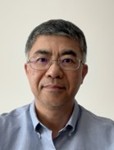 Renyue Cen (岑人岳) is the Director of Center for Cosmology and Computational Astrophysics (C3A). His major original research breakthroughs and achievements include being one of the pioneers in cosmological hydrodynamic supercomputer simulations; first demonstrating that the evolution of the galaxy cluster mass function strongly constrains cosmological parameters; proposing that the power spectrum index in the cold dark matter model could be less than unity; and establishing the modern theory of the Lyman-alpha forest.
 Andrii Neronov is a professor at the Astroparticle and Cosmology laboratory of the University Paris Cite and he is sharing his position with the Laboratory of Astrophysics of EPFL. His research focuses on Multi-Messenger Astronomy research combining data in different observation channels: photons from radio to gamma-rays, as well as neutrinos and gravitational waves, with the goal to understand the mechanisms of activity of high-energy astrophyscial sources and address fundamental physics and cosmology questions. At EPFL, he is involved in the setup of Off-site Data Center for the next-generation gamma-ray telescope, “Cherenkov Telescope Array Observatory”, CTAO and of the Multi-Messenger Online Data Analysis (MMODA) platform combining different types of multi-messenger data analysis tools.
 Tomasz Kacprzak is a Humboldt Experienced Research Fellow at the University Observatory Munich, Faculty of Physics at the Ludwig-Maximilians-University. In November 2025 he will join the University of Applied Sciences and Arts Northwestern Switzerland FHNW as a Professor for High-Performance Computing. He focuses on optimal transport, applying it to physics, Laue neutron diffraction tomography, galaxy-dark matter matching and regression, while developing scalable algorithms.
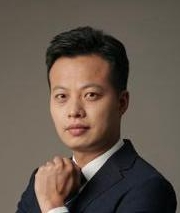 Jiwei Xie (谢基伟) is a full professor and Associate Dean at School of Astronomy & Space Science, Nanjing University. In recent years, he has focused his research on conducting statistical analyses of large exoplanet samples, with the aim of enhancing our understanding of the remarkable diversity, formation mechanisms, and evolutionary pathways of planetary systems.
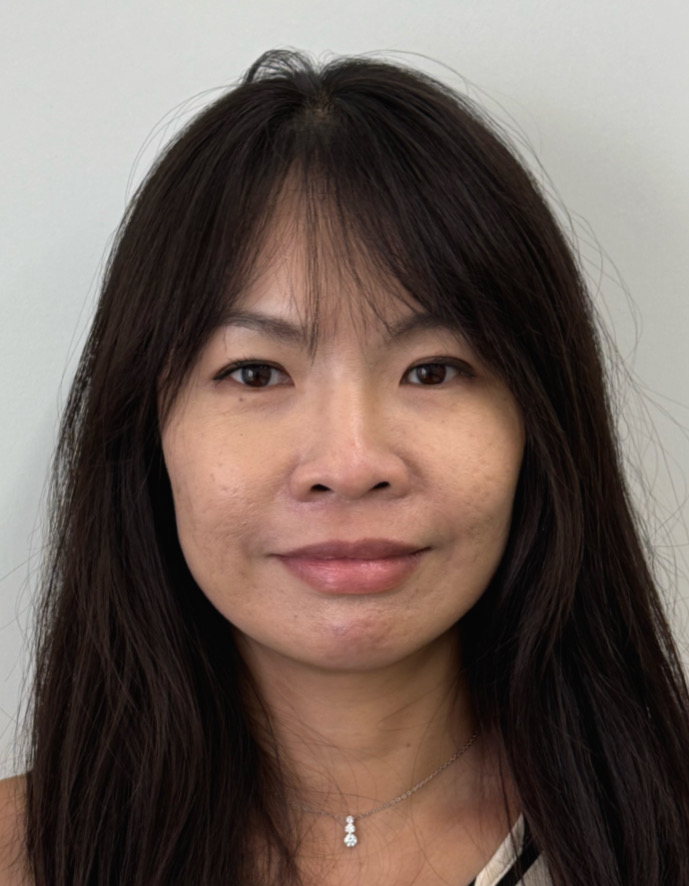 Chin-shin Chang is a scientist at department of astronomy at University of Geneva and a member of the Event Horizon Telescope Collaboration. Her research focuses on Active Galactic Nuclei (AGN), and how AGN are evolved at different stages. A key area of her work is investigating the interaction between the Super Massive Black Hole at the center and its vicinity environment in the AGN.
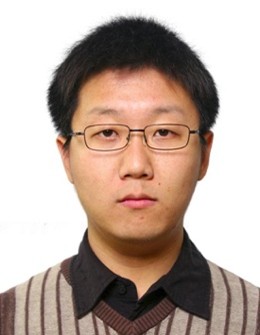 Huanyuan Shan (陕欢源) is a professor at Shanghai Astronomical Observatory (SHAO), Chinese Academy of Sciences (CAS) since 2018. His research focus on weak and strong gravitational lensing. As a core member, he participated in major international weak lensing surveys such as the Canada-France-Hawaii Stripe 82 Survey (CS82), the Kilo Degree Survey (KiDS), and the Decam Legacy Survey (DECaLS), as well as the Hubble Space Telescope strong lensing galaxy cluster program BUFFALO, and the MWA low-frequency radio array project "Lensing of the EoR by HFF cluster".
 Erica Lastufka is a Data Scientist at the University of Geneva. She received her PhD from ETH Zurich, working with the Institute for Data Science at FHNW. Her research interests include foundation models, domain shift, specialized fine-tuning, and heliophysics.
 Shiyin Shen (沈世银) is a professor at Shanghai Astronomical Observatory (SHAO), Chinese Academy of Sciences (CAS). His notable awards include being named a Shanghai Academic Research Leader, an Elsevier Highly Cited Chinese Researcher, receiving the LUJIAXI Young Scholarship, the Shanghai Rising-Star Program, and the Shanghai Natural Sciences Second Prize. He also holds several key service roles, such as Scientific Committee Member of LAMOST, Science Editor of Acta Astronomica Sinca, and Deputy Editor-in-Chief of Progress in Astronomy.
 Thomas Bisbas holds a degree in Physics from the Aristotle University of Thessaloniki, Greece, and earned his PhD from Cardiff University. Following his doctoral studies, he conducted postdoctoral research at institutions across Europe and the USA before joining Zhejiang Lab in Hangzhou as a Senior Researcher. His research focuses on computational astrochemistry, particularly the study of photodissociation regions. He is the developer of the widely used 3D-PDR code and he is leading the ITAMOS project, which aims at understanding the physics and chemistry of the ISM.
 Zhengyang Li (李正阳) is a researcher at the Nanjing Institute of Astronomical Optics & Technology (NIAOT) of the Chinese Academy of Sciences, and Deputy Director of the New Telescope Technology Research Office. His primary work focuses on the research and design of astronomical telescope optical systems, as well as the development of optical instruments and key technologies for extreme-site observatories.
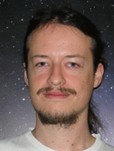 Florian Cabot is a software engineer at SCITAS/EPFL. He studied computer science at the University of Geneva. He started the VIRUP project from scratch, writing all the tools needed to do VR rendering and interaction with large amounts of data. He ported the project to different projection systems at the Experimental Museology lab, and directed and scripted the two movies made with VIRUP. He moved this year to the SCITAS computing center to do scientific visualization both for the Square Kilometer Array project in collaboration with LASTRO and the EUROFusion consortium in collaboration with the Swiss Plasma Center.
 Xiaodian Chen (陈孝钿) is a researcher at the National Astronomical Observatories of the Chinese Academy of Sciences (NAOC), heads the Cold Lake Base Group. He is the recipient of the National Natural Science Foundation of China's Excellent Young Scientists Fund and Key Projects, and has been awarded the DAMO Academy Qingcheng Prize and the CAS May Fourth Youth Medal. His main research interests cover stellar physics, high-precision cosmic distance measurements, and the structure of the Milky Way.
 David Harvey is an observational and theoretical astrophysicist at EPFL, with his main research area focusing on dark matter and the endeavor to understand its properties and dynamics. He got his Ph.D. Degree at the University of Edinburgh and postdoctoral position at EPFL. Much of his research is investigating different ways people can use Machine Learning in a robust way to make transparent and informed inferences on the nature of dark matter.
 Piyush Panchal is currently working at EPFL as an HPC software engineer and involved in speeding up the Pulsar search pipeline. He graduated with an MSc in Computational Science and Engineering from ETH Zurich in February 2020 and then started a PhD at the Seminar for Applied Mathematics with Prof. Ralf Hiptmair as his advisor. He defended his thesis on Electrostatic and Magnetostatic Force Computation With Shape Calculus and BEM on February 29, 2024.
 Lile Wang (王力乐) is an Assistant Professor at The Kavli Institute for Astronomy and Astrophysics, Peking University. He is an expert in numerical simulations of exoplanets and their formation. Lile Wang’s research focuses on numerical simulations in astrophysics. He is now mainly interested in developing consistent methods for GPU-accelerated real-time computation methods, which efficiently co- evolve thermochemistry and radiation fields with (magneto-)hydrodynamic simulations, in real-time.
 Guirong Xue(薛贵荣) is the Chief Technologist of the Science Model Group at Zhejiang Lab, is responsible for the development of science foundation models at Zhejiang Lab. He has previously worked on AI products such as intelligent Go systems, intelligent traffic scheduling, protein design, and large language models. He has also served as a researcher at Alibaba Cloud and the head of the Alibaba Algorithm Committee. His primary research interests include artificial intelligence, machine learning, and big data.
 Yi Yuan(袁毅) is a Research Professor at the Research Center for Space Computing Systems, Zhejiang Lab, China, where he advances global open science and international collaboration. He holds a joint PhD in Wireless Communications from the University of Edinburgh and Heriot-Watt University, UK (2014), and has been a Chartered Engineer (CEng) with IET since 2019. His current focus is on integrating AI models with onboard processing for next-generation space applications.
 Yangdi Xu(徐阳迪) is a Research Associate at the Research Center for Scientific Data Hub, Zhejiang Lab, China. He has two years of postdoctoral research experience at Oxford University UK (2020). He earned his PhD in Computer Science from the University of Bristol, UK (2018), and holds an MEng from Imperial College London, UK (2013). He currently serves as both a deep learning model researcher and project manager, specializing in transformer-based model design and the development of real-world applications for foundation models.
 Shunxuan He (贺顺璇) earned his M.S. degree in 2025 from the National Astronomical Observatories, Chinese Academy of Sciences (NAOC). He is now a Ph.D. candidate in Astronomy at Beijing Normal University, where his research focuses on the observational and theoretical study of RR Lyrae stars to uncover their physical properties and apply them as probes for understanding the Milky Way and nearby galaxies.
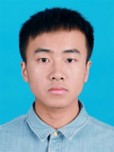 Shengyu He is a Ph.D. student and Doctoral Assistant supervised by Prof. Jean-Paul Kneib at LASTRO EPFL, specializing in large-scale structure (LSS) and galaxy clustering. His main research focuses on spectroscopic systematics and the development of alternative clustering models to improve cosmological inference. He is currently working within the DESI and MUST collaborations, and will further contribute to the Euclid systematics group.
 Xinyue Chen (陈欣悦) is a Ph.D. student at the National Astronomical Observatories (NAOC), focusing on weak gravitational lensing and cosmological large-scale structure. Her research interests include weak-lensing analysis and the application of machine learning for mass mapping. She is currently developing data-driven techniques for CSST early science to study merging clusters and cosmic structure formation.