 WANG Jian (王坚) is the Director of Zhejiang Lab and the founder of Alibaba Cloud, which is a major public cloud provider globally and ranks as first in Asia. He was the chief technology officer of Alibaba Group. He was also the chief architect of Apsara, the computing foundation of Alibaba Cloud, and took the lead in proposing the industrial model of using computing as a public service. He founded the Yunqi Academy of Engineering, a private nonprofit research institute with a focus on scientific research for City Brain, and the Yunqi Science and Technology Innovation Foundation. He is a member of the Chinese Academy of Engineering and lives in Hangzhou, China.
 Jean-Paul Kneib is Professor of Astrophysics and Director of the EPFL Laboratory of Astrophysics (LASTRO) since 2016. His main interest in astrophysics is observational cosmology research. In particular he has been the principal investigator of the SDSSIV/eBOSS project from 2011 to 2018 and has led the construction of the fiber positioner robotic system for the SDSS-V project. He is also leading the Consortium of the Swiss participation to the Square Kilometre Array Observatory (SKAO). He is also active in three observational collaborations which plan to constrain the nature of Dark Energy.
 Alexandre Refregier is a full professor in the Department of Physics at ETH Zurich, a globally renowned institution for pioneering physical sciences research. His research focuses on addressing fundamental cosmological questions (dark energy and dark matter) via measuring the universal large-scale structure. To this end, he uses astrophysical observations across wavelengths (from X rays to radio) and combines observational, theoretical, and instrumental approaches.
 Pedro R. Capelo is a Senior Researcher at the University of Zurich, working at the Center for Theoretical Astrophysics and Cosmology within the Institute for Computational Science. He obtained his Ph.D. from Yale University in 2012, working on theoretical investigations of dark matter and gas content of large spheroidal systems under the supervision of Priyamvada Natarajan. His research focuses on black holes, galaxy formation and evolution, and computational astrophysics. He has published work on the direct formation of massive black holes via dynamical collapse in metal-enriched merging galaxies at high redshift, as well as on the cosmological implications of ultra-faint dwarf galaxies.
 Tomasz Kacprzak is a professor for High-Performance Computing and Artificial Intelligence at the University of Applied Sciences and Arts Northwestern Switzerland FHNW. Previously, I was a Humboldt Experienced Research Fellow at the University Observatory Munich at the Ludwig-Maximilians-University, a Senior Data Scientist at the Swiss Data Science Center at the Paul Scherrer Institute, and a Senior Scientist at ETH Zurich. I obtained my PhD in Physics and Astronomy from the University College London, as well as previously a MSc in Machine Learning from the same university. I am the lead of the FHNW HPC Lab and the deputy lead of the Cosmological Simulations Science Working Group in the Euclid Survey. My interests in include: efficient AI serving on HPC platforms, large numerical simulations, novel computing architectures, reasoning AI for automated science, cosmology from large-scale structure surveys using simulation-based inference, optimal transport and numerical optimization.
 Chao Liu (刘超) is a professor and doctoral supervisor at NAOC, where he leads the Space Station Telescope Science Application Research Group. His research focuses on Milky Way structure, stellar population evolution, and stellar physics. He obtained his Ph.D. from the University of Chinese Academy of Sciences in 2008, conducted postdoctoral research at the Max Planck Institute for Astronomy from 2009 to 2011, and participated in the development of the Gaia satellite as a core member. His research has produced more than 160 international publications with over 10,400 citations, contributing to studies on the mixed origin of the Milky Way thick disk, outer-disk substructures, and machine-learning-based stellar spectral parameter estimation.
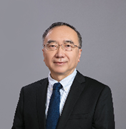 Ali Luo (罗阿理) is a professor and doctoral supervisor at NAOC, where he serves as the Director of the Data Processing Department of the LAMOST Operation and Development Center. He received his Ph.D. from NAOC in 2002 and has focused on astronomical data processing, large-scale spectroscopic data analysis, and data mining. His research is closely connected to the LAMOST survey, including work on stellar parameters, chemical abundances, spectral feature extraction, and machine-learning applications in astronomy. He has published more than 80 papers in international journals such as ApJ, ApJS, MNRAS, AJ, A&A, PASP, and RAA, and has supervised more than 30 graduate students.
 Emma Tolley is an Assistant Professor at EPFL in the School of Basic Sciences, joining the faculty in 2023. She also serves as a Group Leader at EPFL's SCITAS supercomputing center and as the Data Science program chair of the Swiss SKA Consortium. She earned her Ph.D. from Harvard University in 2016, with her thesis titled "Search for Evidence of Dark Matter Production in Monojet Events with the ATLAS Detector." Her research spans astrophysics, radio astronomy, high-performance computing, and data science for large scientific infrastructures, including work at CERN/ATLAS and the Square Kilometre Array Observatory. Her research program bridges collider-based particle physics with large-scale radio astronomy and data science.
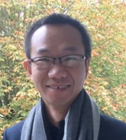 Yanbing Yang is a CNRS researcher at GEPI (Galaxy Evolution, Extragalactic Population and Instrumentation), Observatoire de Paris – PSL. He is of Chinese nationality and is currently preparing his HDR (Habilitation à Diriger des Recherches) in "Numerical Simulation and Galaxy Modelling." His research focuses on galactic dynamics, galaxy formation and evolution across a wide mass range, and the accretion history of the Milky Way, employing multi-scale numerical simulations and comparisons with observational data. He has contributed to studies of the Andromeda galaxy's formation and the Sagittarius stream.
 Adele Plat is a Scientific Collaborator at EPFL's Laboratory of Galaxy Evolution and Spectral Modeling (GALSPEC) in the Institute of Physics. Her research focuses on high-redshift star-forming galaxies and active galactic nuclei, including modeling emission lines of distant galaxies and AGN. She is associated with the FLARES (First Light and Reionization Epoch Simulations) project and has contributed to studies of the ionizing emissivities and hydrogen recombination line properties of early AGN. Her work also spans instrumentation and methods for astrophysics, and she has authored 17 papers receiving 469 indexed citations.
.jpg) Shiyin Shen (沈世银) is a professor at Shanghai Astronomical Observatory. He earned his Ph.D. from the University of Chinese Academy of Sciences in 2004 and worked in Shanghai Astronomical Observatory since then. His research focus on galaxy structure and AI application on galaxy images and spectra. He is a core member of the LAMOST spectral survey and is responsible for the data reduction software of the integral-field-spectragraph on the China Space Station Telescope (CSST).
Shiyin Shen (沈世银) is a professor at Shanghai Astronomical Observatory. He earned his Ph.D. from the University of Chinese Academy of Sciences in 2004 and worked in Shanghai Astronomical Observatory since then. His research focus on galaxy structure and AI application on galaxy images and spectra. He is a core member of the LAMOST spectral survey and is responsible for the data reduction software of the integral-field-spectragraph on the China Space Station Telescope (CSST).
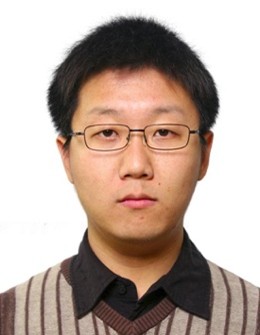 Huanyuan Shan (陕欢源) is a professor at Shanghai Astronomical Observatory (SHAO), Chinese Academy of Sciences (CAS) since 2018. His research focus on weak and strong gravitational lensing. As a core member, he participated in major international weak lensing surveys such as the Canada-France-Hawaii Stripe 82 Survey (CS82), the Kilo Degree Survey (KiDS), and the Decam Legacy Survey (DECaLS), as well as the Hubble Space Telescope strong lensing galaxy cluster program BUFFALO, and the MWA low-frequency radio array project "Lensing of the EoR by HFF cluster".
 Nan Li (李楠) is a professor and doctoral supervisor at the National Astronomical Observatories (NAOC), Chinese Academy of Sciences. He earned his B.Sc. in engineering from Beihang University in 2006, followed by an M.Sc. and Ph.D. from the University of Chinese Academy of Sciences completed in 2013. He subsequently carried out postdoctoral research at the University of Chicago and the University of Nottingham, and joined NAOC as a researcher in December 2019. His research areas include dark matter and dark energy, galaxy formation and evolution, strong gravitational lensing, and AI for astronomy. He is involved in the CSST (China Space Station Telescope) strong-lensing preparation and science data system project.
 Zhu Chen(陈竹) is an associate professor and researcher at the Shanghai Key Laboratory for Astrophysics, Shanghai Normal University, China. Her research focuses on weak gravitational lensing, cosmic magnification, and photometric redshift estimation. Her research contributes to the preparation of large-scale sky surveys and to improving the accuracy of cosmic magnification and weak-lensing reconstruction methods.
 Leander Thiele is a Project Assistant Professor (tenure-track) at the Kavli Institute for the Physics and Mathematics of the Universe (Kavli IPMU), University of Tokyo, where he works in the Center for Data-Driven Discovery (CD3). He earned his Ph.D. from Princeton University (2024) under the supervision of David N. Spergel, with his thesis titled "Getting ready for new Data: Approaches to some Challenges in Cosmology." He also holds an MSc from the Perimeter Institute and a First-Class BA from the University of Oxford. His research lies in theoretical and data-driven cosmology, focusing on cosmic voids, higher-order statistics for weak lensing, the thermal Sunyaev-Zel'dovich effect, and the galaxy-halo connection. He has published on Atacama Cosmology Telescope DR6 cosmological constraints.
 Florian Cabot is a software engineer at SCITAS/EPFL. He studied computer science at the University of Geneva. He started the VIRUP project from scratch, writing all the tools needed to do VR rendering and interaction with large amounts of data. He ported the project to different projection systems at the Experimental Museology lab, and directed and scripted the two movies made with VIRUP. He moved this year to the SCITAS computing center to do scientific visualization both for the Square Kilometer Array project in collaboration with LASTRO and the EUROFusion consortium in collaboration with the Swiss Plasma Center.
 Chin-shin Chang is a scientist at department of astronomy at University of Geneva and a member of the Event Horizon Telescope Collaboration. Her research focuses on Active Galactic Nuclei (AGN), and how AGN are evolved at different stages. A key area of her work is investigating the interaction between the Super Massive Black Hole at the center and its vicinity environment in the AGN.
 Timour Jestin is a 1st year PhD student at EPFL with Prof. Jean-Paul Kneib. After a master thesis at EPFL with Prof. Richard I. Anderson, he moved to UNIGE to work with Dr. Laurent Eyer studying variable White Dwarfs. He then moved on to join Dr. Veerle Sterken at ETHZ to predict interstellar dust measurements for the upcoming Destiny+ mission.He is now back at EPFL, working with cosmological redshift surveys, and particularly with the 4MOST CRS collaboration.
 Pau Solé-Vilaró is a PhD student at the Institute of Cosmos Science in the University of Barcelona (ICCUB). His work focuses on gravitational physics and theoretical cosmology, with a particular emphasis on machine learning applications within them. His research involves using ML models to solve inverse problems while exploring the explainability of their application (latent space embeddings, transfer learning).
 Denisa-Andreea Constantinescu is a Senior Researcher in the High Performance Computing group at the University of Basel, working at the intersection of sustainable computing, performance portability, heterogeneous HPC, and scientific AI. Her current research co-designs algorithms and systems for billion-particle-scale smoothed particle hydrodynamics (SPH) simulations, including cosmological applications, and explores AI-learned operators to improve computational efficiency and portability across architectures. She also holds ongoing research leadership roles in SEAMS, focused on sustainable computing for the Square Kilometre Array (SKA), and UrbanTwin, developing digital-twin approaches for climate-resilient cities in Switzerland. Her work has been recognized with the Intel oneAPI Innovator Award. She received her Ph.D. in Mechatronics from the University of Málaga and has conducted research at EPFL and Northeastern University in Boston.
Jiaxi Yu is a fellowship postdoc at the Kavli Institute for the Physics and Mathematics of the Universe (Kavli IPMU), University of Tokyo, Japan. She is a Chinese national who obtained her Ph.D. in Astrophysics from EPFL in Switzerland, working under the supervision of Professor Jean-Paul Kneib. Her research focuses on observational cosmology, large-scale structure, and redshift surveys, with specific emphasis on the galaxy-dark-matter-halo connection and spectroscopic systematics of emission-line galaxies. She is an active member of the Dark Energy Spectroscopic Instrument (DESI), the Prime Focus Spectrograph (PFS), and the MUltiplexed Survey Telescope (MUST) collaborations.
Hamza Chouh is an HPC Applications Specialist at SCITAS, the High Performance Computing Center at EPFL. His role focuses on supporting high-performance computing applications and workflows within EPFL's supercomputing infrastructure. His research background includes interactive ultrasonic field simulations and applications related to non-destructive testing. At EPFL, he contributes to HPC support activities and collaborative projects connected to the university's computational resources.
 Yongfu Hao(郝永富) is a researcher at Zhejiang Lab, Hangzhou. He previously worked as a postdoctoral researcher at the Montreal Neurological Institute, McGill University (2015–2017), where he developed DeepIED, a deep learning-based epileptic discharge detector for EEG-fMRI analysis. His earlier research focused on medical image segmentation, brain-network analysis, and computational neuroscience. At Zhejiang Lab, he holds patents in brain-computer interface technology, including epilepsy EEG indicator extraction.
 Manni Duan(段曼妮) is a researcher at the Research Center for Astronomical Computing, Zhejiang Lab, Hangzhou. Her research focuses on astrochemistry, deep learning for astronomical data analysis, astronomical image processing, and celestial data retrieval. Her work bridges deep learning with astrochemistry, accelerating the study of molecular evolution in interstellar environments.
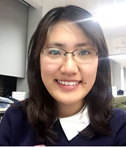 Ying Zhou(周英) is the Deputy Director of the Earth and Space Science Computing Research Center at Zhejiang Lab, Hangzhou. Her research focuses on earth science AI, geoscience data science, remote sensing, deep-time digital Earth, satellite remote sensing, and spatial information analysis. She is a core team member of the GeoGPT project, an earth science domain foundation model developed at Zhejiang Lab. She has contributed to the "Deep-Time Digital Earth" (深时数字地球) initiative, which aims to build a digital earth platform integrating geological data with AI. She has also worked on AI-powered spatial governance and natural resource management, including collaboration with the Ministry of Natural Resources on "one map" intelligent upgrades.
 Markus Bredberg is a PhD student at the Laboratory of Astrophysics (LASTRO), Institute of Physics, EPFL, in Lausanne, Switzerland. His research focuses on the study of diffuse radio emission from galaxy clusters using machine learning and scattering-transform-based methods, particularly for the SKA-era classification and generation of radio galaxy images.
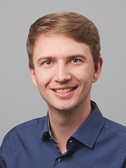 Arne Thomsen is a PhD student in the Cosmology Group at ETH Zürich, working on simulation-based inference for optical galaxy surveys of the large-scale structure. His research focuses on learned summary statistics for implicit field-level inference, combining weak lensing and galaxy clustering.
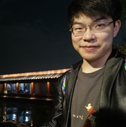 Yicheng Rui(芮易成) is a PhD student at the Tsung-Dao Lee Institute (TDLI), Shanghai Jiao Tong University, also affiliated with the State Key Laboratory of Dark Matter Physics. He is supported by the T.D. Lee Scholarship. His research interests include exoplanet detection (especially cold Jupiter analogs), dark matter physics, astrometry, astronomical data science, and time-domain astronomy. He is a member of the Tianyu Project team, a wide-field photometric survey using two 1-meter telescopes designed to detect transiting cold giant planets in the Kepler and TESS continuous viewing zones. He has co-authored papers on the Tianyu telescope project, astrochemical reaction prediction using knowledge-constrained deep learning, and the LenghuSky-8 all-sky cloud dataset.
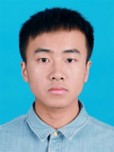 Shengyu He is a Ph.D. student and Doctoral Assistant supervised by Prof. Jean-Paul Kneib at LASTRO EPFL, specializing in large-scale structure (LSS) and galaxy clustering. His main research focuses on spectroscopic systematics and the development of alternative clustering models to improve cosmological inference. He is currently working within the DESI and MUST collaborations, and will further contribute to the Euclid systematics group.